
How Do You Meet Singles Near Your Trucking Route?
By the Truckers Dating Team · July 24, 2026
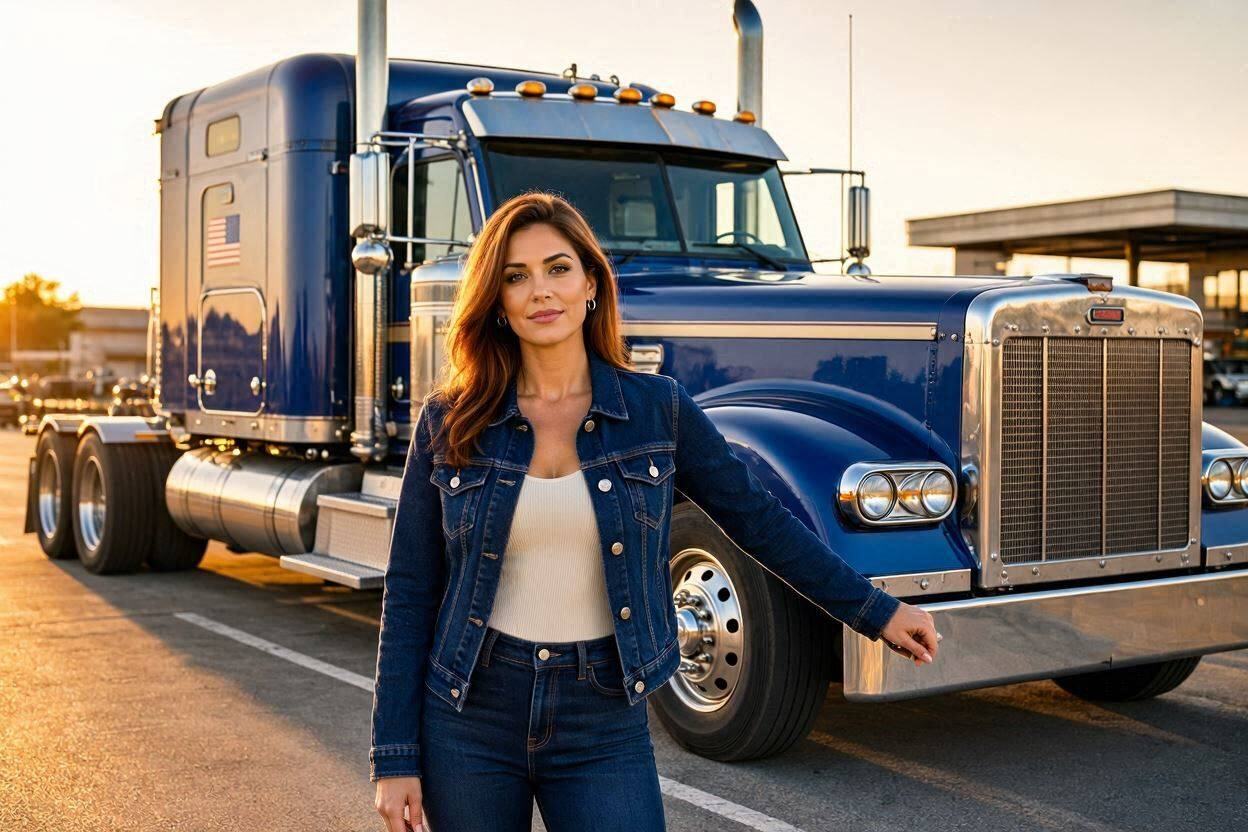
The most reliable way to meet singles near your actual trucking route is to use a platform that treats your route as core profile information, not just a fixed home city. When lanes and regions are part of the matching itself, people whose lives could realistically overlap with yours show up naturally, instead of by chance.
Why "Location" Means Something Different for a Driver
Most dating apps ask for one city and quietly assume that is where you will always be. That works fine for someone with a fixed daily routine. It works far less well for a driver whose "location" changes by the day and whose real dating pool should probably be defined by a corridor, not a pin on a map.
Route-based matching solves this by letting your profile reflect the actual geography of your job: the regions you run, the lanes you repeat, the cities you regularly pass through even if you do not live there. That is a much more accurate picture of where you could plausibly meet someone than a single static address.
How Route-Aware Matching Actually Works
On a platform like Truckers Dating, your profile includes the route or region information you provide, and that becomes part of what surfaces potential matches, alongside the usual factors like interests and what you are looking for. If your regular route runs through a city where someone is based, or your rotation regularly brings you near a match's home area, that overlap becomes visible upfront rather than something you discover by accident three weeks into messaging.
This does not replace ordinary compatibility. It adds a practical layer on top of it: even a great match on paper does not go anywhere if there is no realistic way for two people to ever be in the same place. Route awareness filters for the matches that could actually become something, not just the ones that look good from a distance.
Making the Most of Route Information on Your Profile
Be specific rather than vague. "I run mostly Midwest to Southeast corridors" gives a much clearer picture than "I travel a lot." If your route has a predictable cycle, mention it. If you have a home base city plus a wider region you frequently pass through, list both. The more accurately your profile reflects your actual geography, the more useful the matching becomes, and the less time you spend messaging people whose schedules never overlap with yours.
Turning a Route Overlap Into an Actual Meetup
Once you know a match's location genuinely overlaps with your route, planning something in person becomes much simpler. Suggest a spot along your actual path rather than somewhere that requires either person to go significantly out of their way. A truck stop restaurant, a diner near a regular delivery point, or a coffee shop close to a route you already run keeps a first meetup realistic and low-pressure, without adding extra miles or eating into your schedule.
What This Looks Like Across the Country
Because trucking routes span the entire USA, route-aware matching works whether you run short regional lanes or cross-country hauls. A driver working the I-35 corridor between Texas and Oklahoma has a very different set of realistic matches than one running I-80 across the Midwest, and a platform that understands that distinction is far more useful than one that treats every driver's geography the same way. Our USA page breaks down what the trucking-dating landscape looks like region by region, and our city pages go even more specific for major freight hubs across the country.
What If Your Route Changes Often?
Not every driver runs the same lanes week after week, and a profile does not need a fixed route to be useful. Listing the broader region you typically operate in, such as "mostly Southeast, occasional runs into the Midwest," gives matching something accurate to work with even when the specific lanes shift. The goal is not pinpoint precision, it is an honest picture of where your work is likely to take you over a given month, updated whenever that picture changes significantly.
Truck Stops and In-Person Meetings vs. Matching Online First
Truck stops have always been a place where drivers cross paths, but relying on chance encounters alone is a slow and unpredictable way to meet someone specifically looking to date. Matching online first, then meeting at a truck stop or diner once there is a real connection and route overlap, combines the best of both: the familiarity of a setting drivers already know, with the intentionality of knowing in advance that the other person is actually interested in dating rather than just passing through.
Major Freight Hubs Worth Knowing About
Certain cities function as major crossroads for freight, including Atlanta, Dallas, Chicago, and Ontario in California, and drivers who regularly pass through these hubs tend to have a larger, more active pool of potential matches simply due to volume. If your route brings you through one of these regularly, it is worth being specific about that in your profile rather than defaulting to a smaller nearby town, since the hub itself is often where the concentration of other drivers and interested singles actually is.
Keeping Your Route Info Up to Date
A profile with outdated route information can quietly work against you, surfacing matches based on lanes you no longer run. Whenever a route changes for more than a few weeks, whether from a new contract, a change in carrier, or a shift to a different region entirely, updating your profile takes a couple of minutes and keeps the matches you see relevant to your actual current schedule rather than one from months ago.
Do Regional Routes Have Smaller Dating Pools Than Cross-Country Ones?
Not necessarily, and in some ways regional routes have an advantage. A regional driver running the same set of cities repeatedly builds real familiarity with a smaller area, which means more consistent overlap with the same pool of matches over time, rather than passing through a huge number of places only once or twice. A cross-country driver covers far more ground, which widens the pool but also spreads it thin across a much larger footprint, so the trade-off is depth versus breadth rather than one option being strictly better.
What If You Don't Want to Reveal Your Exact Route to a Match?
You do not have to. Listing a general region rather than a precise, turn-by-turn route is completely reasonable, especially with someone you have not built trust with yet. Being general with route information works the same way being general about exact overnight parking locations does: enough detail to establish realistic overlap, without handing over a level of specificity that only makes sense once a relationship has actually developed.